More Process Praise & Less Person Praise
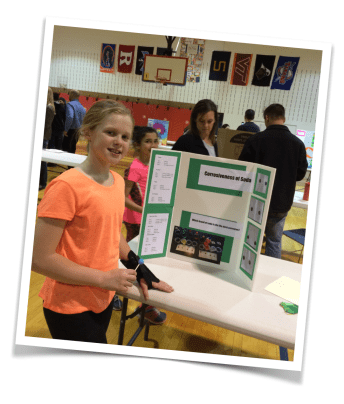
An area of focus for Saline Area Schools, particularly over the last few years, has been to help develop a growth mindset in each of our students. People in a “growth mindset” believe anyone can be good at anything, because your abilities are entirely due to your actions. People with a “fixed mindset” believe you either are or aren’t good at something, based on your inherent nature, because it’s just who you are.
Dr. Carol S. Dweck, a professor at Stanford University, has been the leading voice on developing growth mindsets as a strategy for helping students become lifelong learners. She states,
“If parents want to give their children a gift, the best thing they can do is to teach their children to love challenges, be intrigued by mistakes, enjoy effort, and keep on learning. That way, their children don’t have to be slaves of praise. They will have a lifelong way to build and repair their own confidence.”
One of the ways we can help students is to praise the “process” vs. praise the “person”. The idea that being “smart” means learning comes easy is myth, but one that persists in the minds of many. A fixed mindset about being smart or not can lead students to avoid challenges for fear of not looking smart. Here are a few examples of how process praise vs. person praise can work:
Person Praise: You are such a good student!
Process Praise: I like the way you stayed focused & you kept working on it. That is great.
Person Praise: You got it! I told you that you were smart!
Process Praise: I like the way you tried all kinds of strategies on that problem until you got it!
Person Praise: See, you are good at English. You got an A on your last test.
Process Praise: You really studied for your English test and your improvement shows it.
Person Praise: Great Job! You must be smart at this.
Process Praise: Great Job! You must have worked really hard.
Challenging the beliefs of students with fixed mindsets with process praise can help them see the value and benefits of focused effort, engagement, and perseverance.
Preparing students for rock-climbing instead of ladder-climbing

I think we can all agree that the pace of change in the workplace has significantly increased in the last decade and shows no signs of slowing down. As a district, Saline has focused on the 2014 Forbes, Inc. list of the ten skills employers are looking for in new graduates to help guide decisions for this instructional change. It is one of the reasons that the SAS Learner Profile is so essential. Saline teachers, staff, and administrators have a united focus to enhance the skills that all students will need to possess as they move on to college and career.
In thinking about careers, that landscape has changed as well. The future of working and the workforce, in general, is being impacted by technology and globalization in ways we cannot anticipate or fully predict. We do know that automation will continue to influence the workplace. The 21st Century graduates need problem-solving skills and critical thinking skills to adapt to these changes. Students must be globally aware of the economic impact that automation, technology, and software development have on job opportunities. Students must demonstrate flexibility and embrace the challenge of a new career – sometimes on a moment’s notice. They also need to possess the mindset of a rock climber vs. a corporate ladder climber.
“That means that the notion of a career ladder — predictable and linear steps upward — in a world that is constantly changing is obsolete. Rather, people will need to be like rock climbers — constantly adjusting to new opportunities and challenges. They must also be resourceful so they can take advantage of those opportunities.” – Lou Glazer
Terms such as “growth mindset” and “grit” have become buzzwords in today’s educational environment. Students that embrace a positive outlook, approach adversity as an opportunity, and chart a personal course for continuous growth will be successful in whatever they choose to do beyond high school. They are ready for the rock climb. For those students that have placed walls in the way of opportunity, the educator must guide the student toward richer, deeper thinking that is beyond today’s minor missteps. As we continue to define and implement the student attributes in the Saline Area Schools’ Learner Profile, we need to be mindful of how the students will own and then apply these skills when they transition from the classroom to the workplace.
Environment & Resources
It was great to see the tweet below… Mrs. Terech has created the environment for students to be leaders and share their knowledge with classmates. It also makes me thankful for the resources that our community has provided for us to use! #sascompass
One of my students teaching his classmates how to code. The things eight year olds know these days! @HarvestLearning pic.twitter.com/Vir4DPisQ9
— Kristy Terech (@KristyTerech) November 14, 2017
Community Conversation – November 28th

We are about 1/3 of the way through the 2017-2018 school year, so it’s a good time to host a “Community Conversation” meeting. Over the last nine years I have had the opportunity to host numerous “Community Conversation” events to learn more about what interested community members see as the strengths of Saline Area Schools, and what areas they felt we needed to focus attention on for improvement. Through these conversations and other opportunities, I have learned a great deal about how many of you see our district and it has helped guide me, along with the Board of Education, as we move forward.
There are a lot of issues we can discuss – school calendar, screen time for students, social & emotional health, and many more… You bring the topics.
In an effort to continue this dialogue, I will be making time available on Tuesday, November 28th from 10:00am- 11:00am at Carrigan Cafe, 107 S. Ann Arbor Street. Please stop by, say hello and bring any thoughts about the district you feel I should know.
If you can’t make it, feel free to use “Let’s Talk” and let me know your thoughts.
Thank you,
Scot Graden
Let the Compass be our Guide
Over the last few weeks, I have talked to numerous school and community groups about the needs of the district and community as related to the CARES Recreation Millage and the Sinking Fund Millage that appeared on the November 7th ballot. (Thank you, voters, for your support!) These conversations gave me the opportunity to engage with voters across a broad cross-section of individuals throughout the Saline Area Schools District. After we discussed the campaign related to the millages, the conversation often turned to the direction of the District.
First, it was essential for me to inform citizens about the “Compass” learner profile – focusing on the eight student attributes that we want all students to embody as they graduate from Saline High School: Positive Communicator, Digitally/Financially Literate, Globally Connected, Creative Innovator, Motivated/Self-Directed, Complex Thinker/Problem Solver, Collaborative Leader, and Ethical and Responsible Citizen. Most of the listeners quickly agreed with that focus. However, there was often an awkward pause as they thought about how we measure those attributes. This query provided me with the opportunity to talk about various instructional models – different ways of delivering content through blended and personalized learning methods, project-based learning, service learning experiences, and competency-based approaches. As I talked about these models – I was reminded how far we traveled from traditional paper/pencil types of assessments. I was also struck by how far we still have to go to feel as though we are genuinely embracing and embedding the SAS Compass every day in all of our classrooms.
My focus has shifted from visionary in scope to the more strategic work of supporting the talented Saline Area Schools staff as they redesign instruction and re-think what “success” means for the students. It’s exciting to see the progress we have made. The support from families, community members, alumni, and staff to do the work needed to provide our students with an exceptional learning experience is overwhelmingly positive and appreciated.


We will be hosting a community forum to share information and answer questions about the November 7th CARES & Sinking Fund Millage Renewal. The forum schedule:
Thursday, October 26th – Liberty School, in the Media Center at 7:00pm
Voice & Choice – Not Just For Students
The Saline Area Schools Strategic Framework Goals and Learner Compass are a roadmap for all learners, young and not-so-young. One of the key aspects of improving student outcomes in the Saline Area Schools and living the “Student Led – Future Focused” motto is to allow students to have a voice in their own learning and to be able to exercise choice within the instructional framework.It is important that students make real-world connections with their learning. A one-size-fits-all approach isn’t beneficial for students. In modeling the student led, future focused model for teachers and staff; it is important for me and our administrative team to know that a one-size-fits-all approach to learning is not beneficial for adult learners, either.
Malcolm Knowles, an American educator, studied adult learners and discovered that adults need:
- To know “why” they must learn something
- Need to learn experientially
- To approach learning as problem-solving
- Learn best when the topic is of immediate value
Just like students, staff comes to us with a variety of learning needs and preferences. As leaders, we need to build in the element of choice. Here are a few plans for the year designed to address the model “Voice & Choice” model with adult learners:
- Instead of having all teachers attend the same professional learning sessions, we are looking for ways to allow them to choose topics and formats that fit their preferences and needs. In late August, a symposium with numerous topics and instructional delivery models is planned.
- Encourage staff to set their own learning goals. Engage in conversations with staff to understand and support their unique learning goals.
- Develop and use “micro-credentialing” as model the for adult learning
- Allow teachers to be innovative and take risks. Further, we hope to instill a quest for curiosity in all staff. Over the years, I have seen teachers rise to new heights when they learn in authentic ways.
The start of the new school year is around the corner, and as the excitement for the new year builds, educational leaders are entrusted with the opportunity to show both students and staff that their voice is important in their own learning.
Survey Says….

Summer is in full swing, and so is the planning for next school year in Saline Area Schools. I want to share some of the information that’s guiding our work.
This spring, we asked students, parents, and employees for feedback on the quality of SAS schools. We knew from previous surveys that much of our community views our schools positively, and we were pleased to see those trends continue. However, this year’s survey results also highlighted important opportunities.
Of the more than 2,300 people who took our survey (Thank You!), 97 percent of parents and 96 percent of staff members rated their school as excellent or good, both increases from last year’s survey. Similarly, 84 percent of participating students rated their school as excellent or good. While still a strong positive response, that is a 6 percentage-point decrease from last year.
The survey results revealed disconnects between what our students think and what our staff members think. For example, only 33 percent of participating students said teachers successfully connect classroom lessons with life outside of school, while 82 percent of participating staff members said they do.
An overwhelming majority of all participants said their school is safe, but there was less agreement about discipline. Parents and students (65% and 60%, respectively) were much less likely than staff (81%) to think discipline is enforced fairly.
Parents and students continue to have overwhelmingly positive views about our school technology and the resources and materials available to students. We also saw significant increases from last year in how positively staff members view some district operations, such as central office support of schools (76% to 89%) and availability of technology resources (80% to 92%).
Thank you to everyone who took the time to share feedback and opinions with us. You’re helping us make our district a place where all staff members feel supported, all parents know they are heard, and all students are inspired to achieve beyond what they can dream.
Summer Reading… How is it going?
 As we all know… the summer goes by way too quickly! The fact is, we are nearing the ½ way point of the summer break. How is your summer reading plan going? Are you and your children on track with the goals that you set for the summer? Here are a few quick tips and reminders regarding summer reading:
- Read aloud together with your child every day. Make it fun by reading outdoors on the front steps, patio, at the beach or park. Also, let your children read to you. For younger children, point out the relationship between words and sounds.
- Set a good example! Parents must be willing to model behavior for their children. Keep lots of reading material around the house. Turn off the TV and have each person read his or her book, including mom and dad.
- Read the same book your child is reading and discuss it. This is the way to develop habits of the mind and build capacity for thought and insight.
- Let kids choose what they want to read, and don’t turn your nose up at popular fiction. It will only discourage the reading habit.
- Buy audio books. Listen to them in the car, or turn off the TV and have the family listen to them together.
- Talk about what you’re reading. The value of sharing good literature through conversation is immeasurable. Make mealtime a “book talk” time. No electronics allowed.
- Find something that “stretches” you a bit. Read about a culture, country, or political view that is outside of your comfort zone. Show your children that you’re curious and open to learning about people that have differing views and cultural experiences.
- Take your children to the library regularly. Most libraries sponsor summer reading clubs with easy-to-reach goals for preschool and school-age children. Check the library calendar for special summer reading activities and events. Libraries also provide age appropriate lists for summer reading. Check out Saline District Library: www.salinelibrary.org The teen program is all online this summer! On the Teen page is a fairly comprehensive list of books that all teens should read before starting high school Check it out!
Tips adapted from: http://www.readingrockets.org/article/summer-reading-tips-parents
Community Conversation – June 27th
Saline Area School Community,
With summer underway, I would like to host an impromptu “Community Conversation” meeting. Over the last nine years I have had the opportunity to host numerous “Community Conversation” events to learn more about what interested community members see as the strengths of Saline Area Schools, and what areas they felt we needed to focus attention on for improvement. Through these conversations and other opportunities, I have learned a great deal about how many of you see our district and it has helped guide me, along with the Board of Education, as we move forward.
This is the first one I am trying over the summer (with short notice).
In an effort to continue this dialogue, I will be making time available on Tuesday, June 27th from 10:00am- 11:00am at Carrigan’s Cafe, 107 S. Ann Arbor Street. Please stop by, say hello and bring any thoughts about the district you feel I should know.
If you can’t make it, feel free to use “Let’s Talk” and let me know your thoughts.
Thank you,
Scot Graden


 Scot Graden's Blog