Innovation and technology are not the same.
A common viewpoint is that new technology is innovation. Without question, when a new technology emerges, it looks and feels like innovation. Most of the time, it is. However, when experts define the term “innovation,” they define an action rather than a “thing.” Innovation means staying relevant in fast-paced, changing times. Experts in the field talk about using innovative approaches to address real challenges and adding value to a process or an outcome.
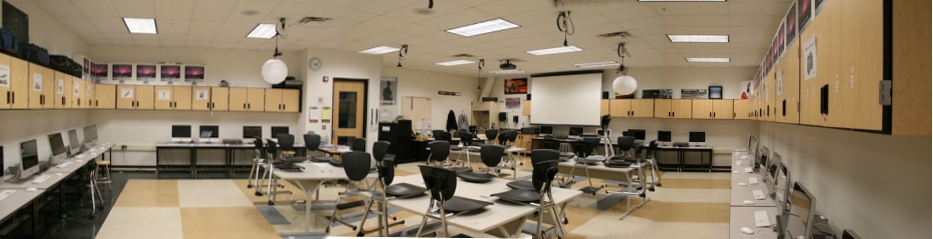
Similarly, when Saline Area Schools is described as an innovative district, that descriptor is often interpreted as the technology – the equipment – is abundant. True enough. There are computers, iPods, iPads, laptops, SmartBoards, Apple TVs, and a plethora of other machines available to students and staff. Saline students and staff use technology to learn, grow, manage, communicate AND innovate. I can’t think of a thriving industry that does not embrace new technologies to either stay relevant or to gain efficiency. Saline Area Schools is innovative because of the organizational culture. New ideas, methodologies, and approaches are sought, tried, and valued. It is that innovation that holds value; not the amount bandwidth used or the number of Chromebooks in each classroom.
Educational technology can enable and accelerate some innovations. However, bold ideas start with creative staff members who are committed to finding new ways to help students develop the knowledge and skills necessary to be successful long after they leave our educational system.
Rigor or Skills? Doesn’t need to be the question…
One of the questions I get asked relatively often is, “Which is more important – rigorous academic content or learning focused on developing skills/mindsets?” The reality is… that is not really the right question. The reality is both AND (yes, a big AND) they should be integrated in purposeful ways.

I had the opportunity to attend the EdLeader21 Annual Event last week and saw the graphic above that clearly articulates the idea that deeper learning is a combination of sophisticated content and a well designed instructional framework that targets skills development.
As the last sentence of the Saline Area Schools vision states, “Our ultimate goal is to instill in our students a desire for lifelong learning.”
Looking for Help!
Saline Area Schools has determined the need to review and update the district’s existing strategic framework. According to Board of Education President Paul Hynek “The review, revising, and implementation of the strategic framework is essential to the future success of Saline Area Schools.” It is obvious that the future will bring unprecedented complexity at an ever-increasing rate of speed, and that Saline Area Schools must be in a position to respond effectively to these challenges. It is important that this update effort, and the resulting plan document, be developed with broad school and community involvement to guarantee the best and most comprehensive thinking possible on behalf of current and future students of Saline. To that end, the Saline Area Schools Strategic Framework Review Committee will be formed.
Committee Responsibilities:
1. Develop a working understanding of the various elements of a sound and successful planning process.
2. Utilize a planning process in a meaningful and well-coordinated fashion to review and update the existing Strategic Framework. http://bit.ly/SASStrategicFramework
3. Develop the specific action plan elements of the strategic framework update for recommendation to the administration and board. It has been pre-determined that the existing Vision and Mission statements will be maintained. Four specific areas of focus have also been determined. However, a review of district progress made during the last several years; identification of specific action plans for each focus area, measurement instruments, standards of excellence to be achieved, timelines for implementation and responsible individuals need to be determined.
4. Ensure the plan elements are clear and coherent so that all members of the school community may understand
- the interrelated nature of the plan’s component elements,
- the plan’s intent, and
- how their efforts to serve children support achievement of the district’s vision and mission.
Timeline:
The committee will meet 6-7 times between November, 2019 and May, 2020. After the initial full group kick-off meeting, groups will be divided in the 4 goal areas of the framework. Each goal area will have 15-20 committee members. The committee will complete the development of the process and initial elements of the plan for recommendation to the board prior to June, 2020.
Applications are being accepted through October 15th. Apply at: http://bit.ly/SFCommiteeApplication
Class Size – New Normal or Bump in the Road?

One of the issues that has been a hot topic within our community this fall is the issue of class size. Facing an ongoing budget shortfall (related specifically to our general fund), we looked to reduce sections as we developed our budget for the 2019-2020 school year. Unfortunately, enrollment forecasting is more of an art than a science.
The one question that has come up that I do want to clearly answer is related to the issue of, “Is this the new normal or bump in the road?” I can answer that clearly – this is not the new normal. While our budget issues are not solved, we are working on a variety of short and long term strategies to reduce class sizes back to our targeted areas.
As we started the school year on August 26th we had several sections – specifically some second grade and third grade sections that were above our 2016 class size task force target ranges. (We are still within our contractual max range in our collective bargaining agreement.)
The reality is balancing the budget and providing the best possible education for our students is almost always a series of trade-offs and priority discussions. For example, we have Instructional Design positions that support our teachers K-12. They offer a variety of professional learning opportunities, as well as, purposeful coaching support for teachers. We have identified these as critical to supporting our teachers and therefore did not look to shift those roles to classroom teachers and lower classes in a couple areas.
We will be discussing the issue in greater detail at the Tuesday, October 22nd Board of Education meeting at Liberty School. The meeting is held in the Boardroom at 6:30pm.
Community Conversation – August 28th
I have the opportunity on Wednesday, August 28th to host a quick Community Conversation from 9:15am-10:30am. The intent is for an open discussion on issues you want discuss, however, I am interested in focusing on student (and family) use of technology. We recently adjusted our Middle School cell phone policy in an effort to improve our learning environment.
As always, there are a lot of other issues we can discuss – school budgets, district growth, school calendar, social & emotional health, and many more…
The event is Wednesday, August 28th from 9:15am – 10:30am at Brewed Awakenings, 7025 E. Michigan Ave. Please stop by, say hello and bring any thoughts about the district you feel I should know.
If you can’t make it, feel free to use “Let’s Talk” and let me know your thoughts.
Thank you,
Scot Graden
Community Conversation – August 14th

I have the opportunity on Wednesday to host a quick Community Conversation from 9:30am-11:00am. The intent is for an open discussion on issues you want discuss, however, with the current budget concerns I would like to focus on revenue enhancement ideas.
As always, there are a lot of other issues we can discuss – district growth, school calendar, social & emotional health, and many more…
The event is Wednesday, August 14th from 9:30am – 11:00am at Benny’s Bakery, 111 W. Michigan Ave. Please stop by, say hello and bring any thoughts about the district you feel I should know.
If you can’t make it, feel free to use “Let’s Talk” and let me know your thoughts.
Thank you,
Scot Graden
Leading for Innovation

As the 2018-2019 school year wraps up, I have been reflecting on the impact of our collective efforts to be an innovative school district. Saline Schools is focused on continuous improvement; acceptance of mediocrity in the classroom is not tolerated. While there is some comfort in the status quo, doing what we have always done does not promote curiosity, innovation, or growth.
There is, nonetheless, a shadow side to this important focus. Fatigue, teacher burnout, and frustration can set in if the initiative does not feel aligned and purpose driven.
As the superintendent, making strategic leadership decisions often feels like a balancing act between competing priorities. When implementing a new instructional innovation such as the learner profile (the SAS Compass), this struggle is amplified. It is particularly problematic when teachers, students, or parents are tasked with changing the way they work, interact, and learn. Change is difficult. Growth involves making difficult decisions. As the district leader, it is essential that I communicate clearly the overall vision for the district. Part of that vision includes helping all stakeholders to understand the “why” of each initiative.
While some teachers are eager to embrace new ideas, others loathe steering away from what “works” or what is comfortable. There are building and department leaders in Saline Schools that strive to improve every aspect of the operation. Yet, those talented leaders may resent the loss of autonomy that comes with district-wide initiatives. While showing those leaders that their work and talents are appreciated, I continue the work of ensuring equitable access to programs for all students. For all of our students, the vision must be communicated with coherence and consistency.
I relish the summer break. It’s never a “break,” but a time to reflect and plan. Planning, visioning, and implementation take time. It seems that taking the strategic plan to scale is what is necessary. Yet, terms like “scaling” echo the factory model that schools have been built on for the past century. I think we’re better than that. So, it’s not just the terminology that I’m wrestling with, it’s how to best articulate the Saline Area Schools vision for strategic leadership and growth.
Saline Area Schools – Class of 2019
Saline High School
Senior Class Survey
Recently, the members of the Class of 2019 completed an online survey to indicate where they would be sending their final transcript. The results for the 425 responses are below:
Michigan Colleges (337) 79%
Out of State Colleges (88) 21%
Michigan Public Colleges (306) 55%
Michigan Private Colleges (31) 7%
Interesting Numbers:
Michigan Private Schools
Adrian College 8
Albion College 4
Alma College 2
Calvin College 2
Concordia University – Ann Arbor 1
Hope College 3
Kalamazoo College 2
Kettering University 1
Lawrence Technological University 1
Northwood University 6
Michigan Public Schools
Central Michigan University 6
Eastern Michigan University 32
Ferris State University 6
Grand Valley State University 23
Michigan State University 65
Michigan Technological University 9
Northern Michigan University 0
Oakland University 0
Saginaw Valley State University 1
University of Michigan – Ann Arbor 38
University of Michigan – Dearborn 3
Wayne State University 3
Western Michigan University 22
Michigan Community Colleges
Lansing Community College 1
Schoolcraft College 2
Washtenaw Community College 59
Public Out of State Colleges
Bowling Green State University 3
Colorado State University 1
Indiana University 3
Miami (OH) University 3
North Carolina State 1
Ohio State University 1
Ohio University 1
Penn State University 2
Purdue University 1
University of Alabama – Birmingham 1
University of Alabama – Huntsville 1
University of California – Los Angeles 1
University of California – Santa Cruz 1
University of Cincinnati 1
University of Colorado – Boulder 2
University of Findley 1
University of Kentucky 3
University of Louisville 2
University of Nebraska 1
University of Pittsburgh 1
University of South Carolina 1
University of St. Andrews – Scotland 1
University of Tennessee 1
University of Texas – El Paso 1
University of Toledo 1
University of Wisconsin at Madison 3
Utah Valley State University 2
Private Out of State Colleges
Amherst College 1
Ashland University 2
Bethel University 1
Brown University 2
Butler University 2
Cleveland Institute of Art 1
Cornell University 1
Duquesne 1
Elmhurst College 1
Furman University 1
Heidelberg University 2
High Point University 1=
Houghton College 1
Indiana Wesleyan University 3
Lewis & Clark 1
Lourdes University 1
Loyola University Chicago – 2
Northwestern University 1
Notre Dame 1
Rhodes College 1
Rose-Hulman Institute of Technology 1
Savannah College of Art & Design 1
Wellesley College 1
Westminster College 1
Xavier University 2
Community Conversation – May 17th
I have the opportunity tomorrow afternoon to host a quick Community Conversation from 1:00pm-2:15pm. The intent is for an open discussion on issues you want discuss.
As always, there are a lot of issues we can discuss – district growth, school calendar, social & emotional health, and many more… You bring the topics.
The event is Friday, May 17th from 1:00pm-2:15pm at Carrigan Cafe, 101 S. Ann Arbor St. Please stop by, say hello and bring any thoughts about the district you feel I should know.
If you can’t make it, feel free to use “Let’s Talk” and let me know your thoughts.
Thank you,
Scot Graden
The Courage to Challenge Insensitive Comments
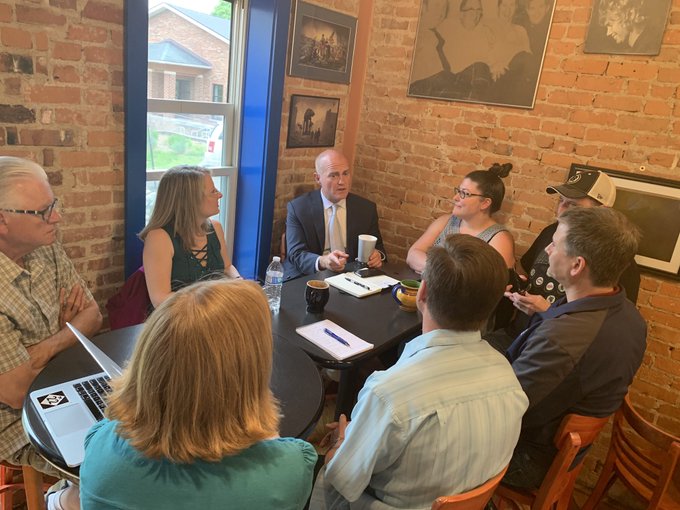
At a recent community conversation, a discussion arose regarding ignorant and insensitive comments. When considering equity, diversity, and inclusion, how should one address a speaker when culturally insensitive comments are made? It is awkward, at a minimum, to confront or challenge a passionate speaker. Yet, failing to do so gives the subtle impression that we are in agreement with the speaker. Beginning the conversation is a start, yet few have the skill set or requisite background knowledge to interrupt and correct a speaker. Knowing when to interject with sensitivity and stop derogatory comments takes confidence. Fortunately, modeling inclusivity and assertive speech are skills that can be taught.
In group settings, individuals may make insensitive, hurtful, or thoughtless comments about others. Such comments may be racist, sexist, or rudely offensive. These comments can come in the form of jokes or slurs. Usually, speakers are unaware of their own biases, old terms, and blind spots. How should one respond?
- If a comment is made maliciously or deliberately, respectfully state that the comment is inappropriate and ask the speaker not to say it again.
- If the speaker is unaware of the faux pas, take the person aside later and explain how the comment may have offended others.
- .If you have a question about a comment that you are about to make in a group setting, err on the side of caution. If you feel that a comment could be misinterpreted, misconstrued or viewed as insensitive to the group, hold the thought. For example, using the term, “Pow Wow,” when referring to a meeting or gathering is disrespectful toward a Native American tradition.
We can all get better. Read, talk, and share experiences. Agree to group norms at work and set hard lines where tolerance is concerned. Building an inclusive culture takes time, just as learning takes time. Start by having conversations at work. Discuss an article, such as this one, published by Harvard Business Review. How to Respond to an Offensive Comment at Work Once the adult conversations begin, talking with young people is much more comfortable. Being confident in the conversation and knowing when/how to correct another’s offensive, condescending, or derogatory comments is a skill that we can all develop with practice.


 Scot Graden's Blog